Featured Post

Fake It Until You Make It

I've been in education for 18 years and the one phrase that always comes up again and again is "Fake It Until You Make It"...

Monday, September 3, 2018

Fake It Until You Make It


I've been in education for 18 years and the one phrase that always comes up again and again is "Fake It Until You Make It". Whether you are new to education or you're not an educator at all, you may be wondering what I am talking about, so let me explain. 


via GIPHY
It's Monday morning. You woke up late, your dog got out of the house and ran off. You spent 10 minutes circling the neighborhood at 6:30 a.m. screaming "SCOUT" as loud as you could, only to find him squatting and peeing in your front yard when you arrive home. You then have to get to school where you know you will walk in late with a pile of things you left for Monday morning out on your desk. The bell is about to ring and students are waiting outside to come in and start their day. What do you do? You "Fake It Until You make It"! You take a giant drink of coffee, turn on some calming music, put a smile on your face, and greet those cherubs outside of your door just like you would any other day. You lift up your shoulders and make those kids think you had the best darn morning ever, so they can have the best darn day ever. 


via GIPHY
It's Wednesday and you are exhausted, wondering how it can only be Wednesday. It is 2:00 and your students have been trying your patience ALL DAY LONG. You are in the middle of a math lesson and notice they are talking and off task. Inside your head, you are thinking of every other job you could be doing instead of this one, BUT, on the outside you are smiling and energetic. You have everyone get up for a quick movement brain break. You let those kids know that you need a brain break- not them- and do something silly. You "Fake It Until You Make It" because it not only helps your students, but it helps you break out of the negative thought process. They smile, maybe laugh or giggle. You are now ready to switch gears and either teach the content in a different, more engaging way, or continue on from where you left off because that little break was enough for both of you. 


via GIPHY
It's Friday and all week you have been heading home immediately after work to more stress and chaos. Exhausted doesn't even begin to describe how tired you are. Maybe you are going through a rough spot in your marriage? Maybe your kids are in every sport imaginable and you are balancing being a working mom by grading papers or planning while watching a softball  or baseball game? Maybe you have a loved one who has been sick and you are balancing being there for that person and teaching 30 students on a daily basis? Whatever your situation is, by Friday we really have to put on our acting shoes and you've guessed it, "Fake It Until You Make It"! This is the day that you will get that Emmy nomination.

via GIPHY
Today is the day that your students need you the most, and you are the most worn out. You will fake smile SO HARD today that your cheeks will hurt. You will be energetic and enthusiastic while repeating the same direction for the umpteenth time today. Today is the day of all days that you need to be the STAR of the show and let those cherubs know that you are there for them through the end. They will see this and will try harder for you today. The students that have challenged you all week will challenge you more today than other days because they are tired too. Try to remember they haven't had practice with "Faking It Until They Make It" and be as patient as you can. 


No one told me that I would have to be an actress when I became a teacher. I have learned over the years that my students see right through me. When I am frustrated or stressed, they can sense that. If I cannot pretend like learning about rocks is the best thing that ever happened to me in this world, then why would my students see the importance of that skill? Putting a smile on your face when you are most stressed out, may seem silly, but it does change the thought process in your head.
 So, if you have been struggling at the start of the school year with feeling stressed, frustrated, or not really interested in what you are teaching, just put a smile on your face and
"Fake It Until You Make It"!


Saturday, August 18, 2018

A New Year... A Fresh Start

The back to school nightmares started a few weeks ago for most of us. 


We went from being able to do whatever we wanted with a focus on our family and friends to setting up our classrooms and spaces and envisioning all of the new faces we will see for the next nine months. It went so fast! Some of us are ready to go back and have some routine, while others are digging in their heals holding on to the last few days of summer. 


Wherever you are, the one thing that is the same for all of us is: We get a fresh start!

You are not the only one who get's a fresh start this year. Your students are coming to you with lots of hopes and dreams also. 


There might be a student who was super quiet last year, and wants to open up more and make more friends. You may have the little girl who always talked, and has set a goal to be a better listener this year. Maybe you had a student who misbehaved ALL the time to show off for another classmate, and this is the year they want to turn that around. 

You have your own goals for this year too. 


You want to make sure you are connecting with students more and put a schedule in place to make sure you have one on one time with students. Maybe you realized that your writer's workshop wasn't exactly how you pictured it last year, so you are tweaking it to make it more successful with this classroom. It's possible that you had a very stressful year with many kids who came trauma to school, and you are ready and prepared for that this year with new tools and strategies to try. 


Here are a few tips from your coach for a successful school year:

  • Form relationships with your students by having morning meeting and closing circles. 
  • Spend the first 6 weeks getting to know as much as you can about your class with conversations and interest inventories. Instead of working while they are having playtime or quiet time, try to sit with a few students and just talk! 2 minutes is enough to find out what they are into. Find out what they like to read, do at home, and what makes them nervous. Then, plan your lessons around those interests!
  • Reach out to parents with surveys and involve them in your classroom. Communicate regularly with them through emails, Remind, or SeeSaw. When they come in and see how well you herd "kittens," they have a new appreciation for you and what you do every day. The other benefit is your students will have more adult attention and help. 
  • Expectations, Expectations, Expectations!! Think of everything you have to teach and practice in the classroom and do interactive modeling of those steps over and over again until they have it down pat!
  • Don't be afraid to stop and re-do said expectations. If the expectation is we transition from carpet to seats quietly in less than a minute and we have talking. STOP! Go back and practice it again. I promise it is annoying to you and those students that are following directions, but the rest of your year will be 100% better!
  • Plan ahead. The more and better planned you are, the less opportunities for students to be off task and get chatty. 
  • Look into energizers and brain breaks and have a list of them with directions ready. If your kids are getting chatty or moving around a lot, they need a break! They haven't had to sit and listen all summer. Just like they build up stamina for reading, writing, and math fluency, they will also need to build up stamina for listening and sitting for longer lengths of time. 


I cannot think of another career that gives you a chance to start over every year. In fact, each day is a fresh start. If today doesn't go the way you planned, reflect on what happened, and make changes for a new start the following day! Although the beginning of the year is stressful for both you and your students, it's important to think of it as a fresh start. You have or will have a new group, new smiling faces, new ideas, and because of that new strategies will have to be used. What you did last year that worked, may not work with this group and that's ok! Flexibility is the key to a successful new school year. 

I hope you have the best year ever!


Monday, April 23, 2018

End of the Year Anxieties...Everybody Has Them!

They start creeping in just before Spring Break but you are so busy with PARCC testing, parent teacher conferences, and planning those last field trips that you push them to the side. When you FINALLY get your Spring Break you enjoy it. You REALLYREALLY enjoy it. You needed this! You have busted your butt day in and day out, working 80+ hours a week to meet the needs of your students. Even if you don't go anywhere, you are just so happy that for one week you get to drink water whenever you want and go to the bathroom when you need to.  But then it happens...that Sunday comes. You know the one I am talking about: The Sunday right AFTER Spring Break! Suddenly they hit you hard. "The End of the Year Anxieties" have crept in and cannot be pushed away. You know what I am talking about. These are the thoughts that keep you up at night from that Sunday after Spring Break until the very last day of the school year. You wonder if you did everything you could for your students. You ponder over how you taught reading and math. You question if you have prepared them for the next year. Even worse, you wonder what your colleague will think when they see that Maddie cannot tell him or her the plot of the story she just read or when Mikey cannot tell him or her what an "interval" is. To top it all off, you have all of the end of year testing to see if students have met the standards for the year. There is no denying that the pressure is on... but I have a few reminders/tips for you at this time of the year that may help you get through the last few months of the school year.


  1. YOU need an outlet for yourself after work. Pick a vice and use it to help you relive some of that stress. For me it is a good workout. For you it may be a glass of your favorite wine. 
  2. LOOK back at Fall data. As teachers we want ALL of our students to succeed and be ready for that next grade level. But, the truth is, that many kids started so far behind and they may just not make it to grade level readiness. Looking back at Fall data and comparing it to where students are now will show you the LEAPS and BOUNDS these kiddos have made. They may not be where you wanted them to be at this point, but they have grown and improved over time!
  3. LOOK at how independent the students are now. This is because of all of YOUR hard work! YOU set the expectations and practiced routines and got them to this place. 
  4. LOOK at how students hug you and want to tell you their personal stories. They ONLY do this because YOU have created relationships with them and they trust you. 
  5. LOOK at how your students are talking about their math and reading strategies and how they can persevere through problems they encounter. This is only possible because YOU set the tone for your classroom and encouraged and modeled this with them. 
  6. LOOK at how your students can get on a Chromebook and create and share projects with one another, you, and their parents. They can only do this because YOU taught them how to, and by the way... they LOVE YOU for it!
There is so much to see if you open your eyes to the growth and changes that have occurred right before your eyes this year. Sometimes, it just takes a little reflection to see your impact. YOU DO MAKE A DIFFERENCE to your students; EVERY SINGLE DAY


Wednesday, April 11, 2018

Using Google Slides On Your Phone Is Easier Than You Think!

Have you ever given a presentation to a group of adults or students and thought... "It would be awesome if I could upload these pictures I'm taking right into the Google Slide Presentation without having to email the picture to myself?" There is a super easy answer, and best of all it is FREE! 

If you don't use Google Apps For Education (GAFE), I have to ask... why not? They are so simple that even my second graders could create there own slideshows and collaborate together on a project all at the same time.  I could provide instant feedback to students when they wrote which was a huge bonus and time saver. Over the next few blog posts, I will be sharing some tips and tricks that I have learned and used to help streamline the GAFE tools, but for today, I will just walk you through using Google Slides. I have an iPhone, but it should look similar on any device you use.

First step is to go to to your App Store and search for Google Slides. Download the application. 
Next, Open the Google Slides app. 
If you already have used Google Slides, you can open up any of your presentations at this point. If you haven't you can create a new presentation by clicking on the plus sign. 

This is where it gets fun! You can add a slide anywhere in your presentation. This works well when you want to share student or adult work at the end of the lesson or PD session. To add a new slide and pictures follow these steps. 

1. Click on that picture in the bottom right and choose your format. 


2. Click the plus sign on the top right.


3. Click on image.


4. Choose from photos if you have a photo saved or choose from camera if you want to take a photo right then to insert.
Your photos will then be added to the slide! You can change their size, rearrange them, or make a collage. I listed all of the steps for the beginner, but it only takes a few minutes. 
Here are some other benefits of having Google Slides on your phone as an application:
  • You can read and see all Google Slides that are shared with you as long as you have your phone with you!
  • Students can share Google Slides with you and you can provide feedback using your phone or device. 
  • You can work from anywhere without having to have your laptop!
  • Teachers or students can see what other groups did either during your presentation or after if it has been shared with them. 
  • You can save these or use them as evidence for your evaluation. 
  • It is super easy!
If you have any questions, please don't hesitate to ask or comment below!


Saturday, March 3, 2018

R.I.P Clip Charts- The Evolution of Whole Class Behavior Plans And Why I Stopped Using Them

Pocket Chart Behavior Plan Example

You were told in college to use them. The teachers you were placed with for student teaching and observation hours used them. You were even asked in your interview what your whole class behavior plan would look like. You worked for hours planning out what it would look like, how it would look, and how it would be explained to students. It was your guide to an orderly classroom environment. Or was it?

There is no denying that our educational practices of discipline have changed over the years. When I was young and in elementary school I don't ever remember seeing a clip chart. If you didn't listen, then you stayed after school for a detention. If you were really misbehaving, you went and saw the principal who had a giant paddle hanging on his wall. Luckily, I never had to see the paddle, I just heard about it!

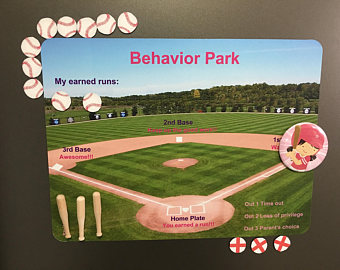
When I graduated from college we had learned all about positive reinforcement and how much praise students needed. I loved the idea of recognizing students for great behavior but didn't like the idea of the stop light or the clip chart. I had read or heard about a positive plan called "Behavior Baseball".
This is borrowed from a Google Search- not my actual chart!

I felt like this was the best thing ever for my first grade students. They all started on a home run daily. If they made a bad choice and couldn't change their behaviors they moved back to third base after a reminder was given. If they continued they would go back to second, and then first. Of course I spoke with them and we came up with a plan for improving their behaviors, but the damage had already been done. They were embarrassed for being different from the other kids.  To top it all off, I introduced money to my first graders by giving them a penny for each day they stayed on the home run spot or third base. I spent at least 5 minutes every day handing out pennies and making sure students colored the correct color on their chart that went home. (home run- green, third base- yellow, second base- orange, and first base- red). But, something still never felt right. My students who always behaved always had more money for our monthly store time and my students who struggled with behaviors always felt ashamed when moving their baseball back a base.  At store time they would cry when they had only a few cents to spend and the other kids had a penny for each day. This plan was only working for the kids who didn't even need it. So, I took it down and threw it away. R.I.P Behavior Baseball.

In the middle of my career, I stayed home with my son and homeschooled him for first and second grade while he received behavioral therapy. One of the main reasons I decided to pull him from school after kindergarten was because he would cry to me at night saying, "I won't ever make my goal! I am always on red! I can't control myself mommy!" It was devastating to see my son feeling so negative about school at such a young age. He was also having sever behavioral issues a home and I knew early intervention was the key to a successful future for him. One thing I was sure of was that when I returned to the classroom, I would do things differently.

So, when I returned, I was so excited to have a different plan! I still wanted to recognize the positives I was seeing, and wanted students to know that if they made a mistake they could come back from that mistake and still end up on green at the end of the day. YES.. this would be the plan that would work and would still meet the expectations parents and administrators had for behavior plans in the classroom. I would combine this plan with DOJO points and students could keep track of how many times they clipped up or down. This had to be the answer.... or so I thought.


Since you've seen the name of this post, it obviously wasn't the answer. Students still had to go over and move their clip. When they moved up they were super happy and excited. They could even FLY OFF the chart and onto my shirt for everyone to see how GREAT they were doing. This worked out great for the kids who were always behaving and those that needed that extra praise and encouragement. But, once again, when a student was making a bad choice and had to clip down, it just felt plain wrong. They would have to walk over and clip their name down for everyone to see. Sometimes I would do it without saying anything, and everyone still would look directly at that student knowing it was him or her. It felt so guilty and wrong, and honestly, all of the time I spent trying to "catch" students being good and making sure at least someone different clipped up daily was exhausting! To top it all off, students would say to me, "I just helped Mikey pick up his school box, can I clip up my name?" Students were behaving only for extrinsic motivation and had no intrinsic motivation to just behave because it was the right thing to do. Again, this chart was not working. It had to be taken down. R.I.P Clip Chart.

So last year, I decided to try a whole new method. I was going to focus on making better connections with my students. I would focus on our visible learning in the classroom and ONLY on learning behaviors. I really wanted students to learn that intrinsic motivation was so much more important. So with the help of some teachers and a very creative friend Sandy Fiorini, a group of us began using a new plan in our rooms. It was based on our schools Visible Learning Characteristics but could be adjusted to any learning trait.


These were the desk plates that each student had on their desks. I also had a chart hung in the room.

 
Students also set a goal for each week on Monday and reflected on Friday's using these sheets. 

The most surprising part of this program was how students were asking where the clip chart was at the start of the year. When I explained we didn't have one and I trusted we would all become a community of learners who work together they were in shock! I felt like I was finally moving in the right direction. Students were being recognized when I saw which skill they were working on. Other students could move a students name to a Visible Learning quality if they noticed them doing it. Students were more aware of how and when they were being a Visible Learner. My kids begged for Class Dojo points so I tied the points to when the clipped over to a Visible Learning quality. They didn't lose points, an only received points. When students misbehaved we had a private chat about it. For extreme cases when a conversation wasn't enough and misbehavior was a common thing, we set up a private behavior plan where the student and I tracked areas on which they needed reminders. The parents, that student, and I worked together to praise and encourage hard work and effort on areas of struggle. I saw happier students and I felt better about the behaviors being addressed on a one to one basis in a private way. Something still wasn't right though. I still felt the need for kids to have clips! Part way through the year, I dropped the whole class Visible Learning Clip Chart and only used the desk plates for self reflection. Upon reflection, I was still wasting time by having certain kids go and clip their name to the trait they were exhibiting. Kids who were more risk takers moved their clips more often than those who were not doing these things. I kept the chart up, but the clips went home. In retrospect, I wish I had dropped the points as well. I only kept them because students got to choose items I was giving away at the end of the year by the number of points they received during the year. The more points you had, you got to be the first person to choose an item. EVERY student got several items, but again those with less points knew who they were and so did everyone else. This is a huge regret I have, and I wish I could go back and change things. 

So, with no chart, no points, and no visible behavior plan how would my students know what was expected? The same way they would in any other class I have had. We set expectations together as a group. We developed our classroom rules and norms together and practiced and modeled expectations and routines. We discussed issues at a class meeting when they arose. We continued working on  creating a safe and happy classroom community where all students can count on one another and are responsible for our learning every day. We ALL recognized others when they were being kind, caring, safe, and persevering in their learning. When a student misbehaved, I addressed it privately with that student. When behaviors escalated, students were given a calming down place to collect themselves so we could talk and brainstorm solutions. I used Go Noodle's calming tools when I saw my whole class needed a break and then used those same strategies one on one with a student in crisis. All of these things happened in my classroom with behavior clip charts, but now there was no humiliation and embarrassment attached to a misbehavior when a child couldn't control himself or herself. I felt better and so did my students. 

Recently I have begun learning about the Zones of Regulation. This is definitely the next step for me in my evolution of helping students to be self aware of their emotions and feelings. I will write a post about this later as I learn and research more!
Zones of Regulation


How has your discipline system changed over the years? Maybe you are new to teaching and don't know how to get started. I'd love to hear your thoughts in the comments below!


Saturday, February 24, 2018

It Is Just One More Thing

It Is Just One More Thing

Dear Teachers, 
we need one more thing from you. 
It really isn't much to ask. 
When we look at everything else you do, this doesn't seem like a big deal. 
It's just "one more thing."

We heard how you smile and greet students each morning. 
We heard about the way you stopped that little girl, with her shoulders drooping, to see what was wrong, and to give her encouragement in her day. 
We heard how you checked in on her throughout the day, even though she isn't even in your classroom. 
We heard how by the end of the day, she was smiling, and ran to you to give you a big hug. 
We know that this is something you do each day, although each day it's a different student and a different child. 
We promise it is just "one more thing."

We heard how you were the first one in the parking lot this morning and the last to leave at the end of the day, spending your time planning and preparing for the perfect lessons. 
We heard how you had well thought out lesson plans that were differentiated to meet the needs of ALL of your students. 
We heard about your Teachers Pay Teachers Account and the hundreds of dollars you have spent just trying to get the perfect resources and tools for your students. 
We heard about your blisters from your hot glue gun as a result of spending your whole Sunday putting together those inch worms for your measurement lesson. 
Really, it is just "one more thing."

We heard how you comforted and cared for that boy when he fell on the playground. 
You cleaned up his knee, put a band aide on it, kissed your hand and touched it as he smiled with crocodile tears up at you. 
We heard how you gave that little girl a snack in the morning because she hadn't eaten breakfast. 
We heard how you paid for lunch for that boy because his parents haven't sent his money in yet, and he was crying because he would have gotten a plain sun butter sandwich. 
We heard how you let that student quietly rest on the bean bag in your room, because she was up taking care of her siblings last night while her single mom was at work. 
We're telling you, it is just "one more thing."

We heard how you met with your class each morning to talk about the days activities. 
We heard how you brought up and modeled ways to handle conflict in and out of school. 
We heard how students were smiling and sharing with one another, role playing how to express their feelings. 
We heard how you responded to students in an honest and caring way. 
We heard how you took your plan time to eat lunch with a group of kids who were struggling with behaviors in the classroom JUST so you could make sure they know you are there for them. 
But really, it is just "one more thing."

We heard about the way you locked the classroom door and shut the blinds. 
We heard how you calmly and quietly moved the kids to the corner away from the door. 
We heard about the way you smiled at them to let them know this probably was just a practice drill as the "BEEP" BEEP" "BEEP" of the lock down alarm was ringing.
We heard how you put yourself closest to the door knowing that if it were real, you would do anything to protect these children because...
YOU LOVE THEM. 
Honestly though, it is just "one more thing."

We have never been a teacher in a classroom, but we know what is right for kids. We just know!
We make the decisions on what tests you use and determine if you are doing a good enough job
We want you to prove your worth on your evaluations by spending hours and hours uploading or collecting evidence of what you do on a daily basis. 
We will know if you are an effective teacher only if your kids are making adequate growth on their test scores. 
We just have "one more thing" for you since we know it's not a big deal. 
We want you to conceal and carry a gun. 

Because, it's not a big deal, it's just "one more thing."

Or is it?

Best regards, 
Your Politicians

Saturday, February 3, 2018

Healthy Competition In and Out of The Classroom

As I type this, I periodically stop to "think". Normally, when I "think", I stare out the window at the blah of winter and all of its dread at this point in the year. But, not today! Today, when I "think", I am standing up and walking in place. I'm not the only one doing this today. Within a one hour radius of my school, several teachers are pacing while watching their favorite shows, walking in place while cooking dinner, or are walking up and down stairs three times before they actually grab that one thing they need.

You must be thinking "these people are crazy".  Well, most people do when they see us walking in place and talking in the halls at school. But, really we aren't... I swear!!! The real story is, my principals and I have launched a walking challenge with the staff. We didn't make this challenge up on our own. Like all good teachers, we stole borrowed the idea from another building. The basic idea is everyone pays a small sum to participate, teams are formed, and your team's weekly steps get recorded. We are walking across America starting in California at The Golden Gate Bridge and ending in New York at the Empire State Building. We are walking actual miles! To help us, we get bonus challenges that will give us extra steps as a team. In the beginning, I thought if I got 15,000 steps a day I would be happy. Once I saw the 25,000 steps per day people were getting, I knew I had to step my game up... LITERALLY!!! People are taking this seriously!

Some benefits I have already seen in our first short 3 weeks of the challenge are that people who teach different grade levels are talking and getting to know each other better. It is really uniting our school and removing the silos we tend to see in a building. Teams are making shirts and funny names up like "Holy Walkamolies". We group text each other  for encouragement. Some even give challenges within their own team. One team has invited everyone to work out after school one day each week together. Even teachers who didn't participate are cheering us on in the hallways and encouraging us by asking how many steps we have gotten in that day. The biggest benefit is it is bringing our staff together in a positive way.

Another thing happening this month is the Olympics. Our school is using this memorable event to promote competition among students as well. (But more on an individual basis, not student to student competition.) Our kids are being encouraged to read a certain amount of minutes to earn a Bronze, Silver, or Gold metal. Additionally, our primary students are doing a coloring competition, and our intermediate students are doing a writing competition making up a backstory for the official Olympic mascot. Each class is learning about an Olympic sport and researching it for a whole school Olympic board. You can just feel the energy in the building!

So all of this competition got me thinking. (Dangerous right?) How could we use this healthy competition among PLC's and classrooms in a building with a focus on academics? Could we challenge other classrooms on a specific area that we see all kids need to improve on like math fact fluency or reading fluency? Could we use a measure we already use to track student growth and include students in setting a classroom goal with a prize in the end for the winning class? I am envisioning this as an independent competition also where students set their own personal goal in specific areas and then they are rewarded with a privilege when they meet their goal.

Although I am not one to love extrinsic motivators, this race at school has really shown me how people love to get a reward for something they do. I wonder how serious people would be taking the race if they hadn't paid some money up front and there was no prize in the end? I think our students would be more motivated if they had something to work for in addition to growing as a learner. They will see that they have grown as a learner and be proud of that, but will also have the satisfaction of being able to have a pajama day or free choice technology time for winning a learning competition.

I'd love to hear your thoughts and ideas on this topic! Please comment below or send me an email. :)


Sunday, January 7, 2018

Just Say "NO" to Resolutions and Say "YES" to Daily Attainable Goals!


If you are reading this you are most likely a teacher and have either just finished your relaxing break or returned to work a few days ago. In my case, this is my last day off before returning to my normal schedule. I am a bit worried about how my body will respond to me getting up early and most especially, the lack of delicious adult beverages I consumed each day while off work! My pants are tighter than ever and I went to bed past midnight for 14 days straight. (I can thank Hulu and Netflix for that.) All of these factors mean that it is the perfect time for me to do some goal setting. 

Many people like to start the new year off by setting some realistic (or sometimes not) goals for the new year. This year I have decided to switch things up a bit and I am goal setting differently. I hope it will help you and your students too. Don't get me wrong, I still have long term goals that I would like to see happen. Those goals are important to me, and I keep them in the back of my mind each day. But let's be real here. Most people set a New Year's resolution only to be disappointed the following January because it never came to fruition.  So, I have something new I am going to try this year: Set Daily Attainable Goals.

So, what does this look like? For me, checklists are the easiest way to monitor myself and my goals.
If another format works for you, do it! I have created a spreadsheet for each day of the week for you here. You don't need to use this worksheet, but it can be used as an easy way to organize daily goals for yourself or for your students to write their goals each day.

When setting daily attainable goals for yourself try to set a variety of goals for each day. For example, on Monday, my checklist might look like this:
  • Drink at least 4 bottles of water.
  • Take at least 6,000 steps.
  • Stay focussed and answer emails before I leave from work.
  • Get new coaching appointment schedule created.


I will just jot these down on a post it and check them off as I complete them, or I will use the worksheet I created. The point is to see your actionable goals being accomplished each day. You won't believe how great you will feel at the end of the day and how focussed you will be on reaching your daily goals. If you want to take this further, you could create a weekly, monthly, or yearly checklist for your short term to long term goals. Make it work for you!

Goal setting isn't just for adults. Students who set goals for themselves and list out steps to achieving those goals will also make huge gains and have a great feeling of self-worth. Your students could do this first thing in the morning and set a personal kindness goal like "compliment someone on their hard work" and "work on my stamina during reading." They can have one goal or as many as they want. This is also a great time to re-cover class agreements that were made at the start of the year and make necessary changes. When setting goals as a class make sure it is measurable so students can get specific feedback on how they are doing with meeting the class goal. Visual thermometers are a great way to show students how they are progressing towards meeting their class goal as a team.

Are resolutions a bad thing? No way, but they are something that many people do. Do you know how much money has been spent on gym memberships of individuals that have only gone into the gym once or twice? I actually don't know the statistics on this, but I am guessing the gym owners are the ones with the huge smiles by the end of the year. At least in my case they were. So say "NO" to resolutions that are hard to keep  and say "YES" to setting daily attainable goals! What kind of goal setting do you do? How do you make sure you stick to those goals? I'd love to hear your thoughts!

Sunday, December 17, 2017

A Teacher's Guide to Surviving the Week Before Holiday Break

T'was the week before holiday break... 


...and all through the school, the kids were super hyper while the teachers tried to keep their cool. The coffee bar was stocked full of strong winter brew, with lots of chocolate and candy to get teachers through. Administration and crisis team had walkie's on and ready to go, preparing for the worst, but hoping it wouldn't be so. The nurse and custodian were prepared too, flu season had come and they knew just what to do. The secretaries were ready with fast hands on those phones, to get the back up guest teacher, good 'ole Mrs. Jones. Teachers were creatively mixing fun with required, finishing up the grading period, and feeling quite tired.  Secret Santa gift giving had started among staff, with little gifts and sneaking around, causing some people to laugh. So, how does this school remain so positive and at ease? They followed these survival tips and it was a BREEZE!


Survival Tip #1- It's OK To Take A Break


via GIPHY

This goes for you and for your students. While you are feeling rushed and hurried and stressed about getting your end of quarter grades done and holiday shopping complete, the kids are also feeling the stress and rush of it all. If you are feeling overwhelmed, take a few minutes before the kids come into your class to listen to quiet music, relax and set your intention for the day. When you see your students are struggling to focus. Stop your lesson. Give them a minute to turn and talk, stretch their legs, or even jump onto www.gonoodle.com for an energizer or a soothing refocus activity. If you are feeling like you are getting frustrated or can't focus, tell your students you need a brain break and put on some quiet music and let them have 5 minutes of quiet free time for drawing, reading, writing as long as they are quiet. Brainpop and Youtube have lots of short educational videos you can even put on to just have a few minutes to regroup.

Survival Tip #2 Plan Ahead!


via GIPHY

Of course you have a plan for your week, but how thorough is that plan? Do you have your materials out and organized? Is that holiday craft sorted and ready for students? Do you know what assessments you will use and which ones you won't? What are your Learning Targets and Success Criteria? The more you have organized ahead of time, the less instructional time lost. This is the week your students will not be able to be quiet during transitions. They will be chatty in the hallway, they will be chatty at their desks. Plan in opportunities for movement and talk. Put the students in charge of their own learning. This is NOT the week to have long transitions between activities while you gather the materials for the next class or lesson. YOU WILL LOSE THEM! Have everything plus extra planned out and ready. Keep the pace quick and engaging and make what they are learning fun.

Survival Tip #3 SMILE


via GIPHY

There is a ton of research on the impact of a smile. A simple smile can brighten someone else's day. A smile goes a long way in making others feel better, but it surprisingly does wonders for your own emotional health too. Try it now, while you are not feeling impatient or frustrated, to see the impact. Put on your biggest, most fake smile, and try to leave it there for as long as you can. If you can, take a silly selfie or get on Snapchat and send a pic to a friend. Next time you are angry or feeling yourself get frustrated, put on your biggest most fake smile and stick with it for a few minutes. It works! I do this regularly, and even though I may look silly or feel strange doing it, it has helped to change my mindset in the moment. Teach this trick to your students when you see one or more that may need it. You'll be so happy to hear the giggles from your class.

Survival Tip #4 Remember, You May Be The Best Part of A Student's Day


via GIPHY
Sometimes the student that drives you the most crazy, is the same student that needs you the most. We don't know what happens when our students leave our room each day, but based on the stories they tell us, we know it isn't the same for everyone. If they are lucky, they go home to loving, caring homes where they are cared for and have everything provided to them. Sadly though, many of our students don't go home to this at all. They go home to a place of stress and chaos. So many of our students will be alone at home over break, due to both parents working or parents not being able to afford daycare.  Knowing this can cause anxiety in many students. They like the structure you provide them and they know they get breakfast and lunch every day at school. They know someone is there to listen to them and guide them. This week, those students, the ones that get to you the most at times, need you the most. They need to know you will be thinking about them. They need to know that is is ok that their traditions may not be the same as everyone else's in the classroom. Most especially, they need to know that you will miss them. Make this clear to them during this week.

Survival Tip #5 Get Involved With Staff Activities


via GIPHY

Does your school do a Secret Santa, ornament exchange, staff lunch, or Ugly Christmas Sweater competition? If they have any activities that help you to bond as a staff, this is the week to jump on board. Everyone is feeling overwhelmed and wants to just get through these last few days. Lord help us if we have a full moon on top of it all. For me, family obligations and my long drive have gotten in the way of me participating in Happy Hour or after school events up through now, but these are things I can participate in while I am at work. Giving small gifts to someone and seeing the smile on their face, or hearing how much they enjoyed trying to figure out who their person is helps to build relationships with your co-workers. If that's too much for you, or it is too late, jump on board for the Ugly Christmas sweater competition, or the staff luncheon. It is a time for you to all talk and laugh and share what you will be doing over break.

I hope these 5 easy tips will get you through this last week before break. I wish you the happiest of holidays! Enjoy your time with family and friends. Drink, relax, and rest up for the last half of the school year!

Sunday, November 12, 2017

Promoting Kindness in the Classroom

November is the time of year when most people stop and take a moment to be thankful for the wonderful things in their life. It is usually a time when teachers have students write about what they are thankful for too. But, what happens during the other months of school? Are you promoting kindness and gratitude throughout the school year, or mostly in November? This post is to help you to continue the gratitude and kindness throughout the entire school year. 

Last year I read a lot about promoting kindness in the classroom. I tried to find activities that would help my students to be thankful each day and also to be kind to one another. The little steps I took made a difference in my class, and in how I felt each day coming to work. I hope a few of these tips and resources will help you along the way too. 

The first step is practicing gratitude on your own and modeling it for students. Develop a routine with students where each day you have what you are thankful for written on the board or in a morning message to students. Each day on my board, I had three words of the day such as, "Always be kind!" or "Do your best!". Under that I wrote what I was thankful for. It could be as simple as, "I am thankful I woke up on time today." or "I am thankful to hear you listened so well for the guest teacher." Students would enter the room, and write their own thankful statement as part of the morning routine. I had them do this in their assignment notebooks so parents could see them, but some teachers prefer to have a worksheet that students add to each day. I created one for you that you can use. The first page is for a daily gratitude and the second page is for a once a week reflection. 
Link to free template


This could also be part of the sharing portion of your morning meeting once a week, or at the end of day meeting. Some teachers do Friday letters to families and this could be added to that. Also, I suggest having a place in your classroom where students can reflect and thank others. I had a "Reflection Board" which was used as a parking lot for questions to me, questions to the class, compliments for others, or compliments for the class. It was a great place for me to see students' thoughts and ideas and a great way for students to share. I got the white board sheets in a roll from the Dollar Store! 


Another thing you can do to promote kindness in the classroom is to have students recognize one another for being kind. They need to hear it from their peers as well as you. I had a Boogie Board like this in my classroom that my students loved to use instead of their whiteboard each day. In the beginning of the year, I modeled how I chose a student for the day by giving specific feedback to that student for why they earned the Boogie Board. "Natalie is earning the Boogie Board today because she showed perseverance during math yesterday when the problems got tough for her." Soon, students were ready to nominate a peer that they had also seen being a visible learner in the classroom. I just used an old pencil box and students once a week would nominate another student to use the board. When I pulled a name, the student who was the nominator said why they nominated that person. Sometimes there would be 3-5 students who nominated the same person and they would all share why they nominated the student who received the board. You should have seen the pride the nominee showed by hearing the compliments about their work. To prevent the same students from getting the board each week, I kept a checklist and each week students who were not nominated could have their names put into the pencil box. This way, EVERY student, even those who had a hard time in class with behaviors would be recognized by a peer. 

The third way to promote kindness in the classroom is to use these little templates that I created for the year starting in November. I don't think students know each other well enough to do this earlier in the year, so November is a great time to start. 

Get the template for these HERE.


My rule for these templates is students cannot write, "Thank you for being my best friend." They are also encouraged to look for people who don't have one hung up to find something the could thank them for. I had them in a little basket and students would grab one when they finished work or if they had free time. Once finished, they would hand them to the receiver, and the receiver was the one who got to hang up in the room. I hung mine in rows along the shelves for everyone to see. I sent them home at the end of the month and put out the next month's shape to continue the kindness.


Finally, there are a ton of kindness and gratitude books out there for a read aloud with your students. Click HERE for 13 books that could get you started!


I would love to hear how you promote kindness and gratitude in the classroom year round. Please comment or ask questions below. 

Saturday, October 28, 2017

Parent Teacher Conferences.. Prepare Yourself My Friends


If you have been teaching for a while, I am sure you have experienced the wide array of personalities that spawned those beautiful learners you get to work with every day. Parent Teacher Conferences are the one time you get to sit down and spill out everything you have learned about your students in 10-15 minutes. If you are lucky, you get to do this twice a year. They take skill, organization, and honesty. You have to show parents that you care and that you are an advocate for their child. I will get to all of my tips and tricks to changing your conferences into Student Led Conferences at the bottom of this post, but first, I thought I would help you to get to know the parents that you will be working with so you can be prepared for anything that comes up.

The Crier

This is the parent who is either so proud of the accomplishments their child has made, they don't know what else to do about their child's misbehavior in class, or they are just so overwhelmed with their own personal life that they end of crying at some point during the conference. I have to admit that with 5 children, I have shed a tear or two for all of the above reasons at conferences. This parent needs reassurance that you are there for their child, you will do whatever it takes, and you are not giving up. If the parent only talks about their own personal life and their own turmoil (which has also happened) try to listen for a minute and then turn the conversation back to the child by saying, "I am so sorry you are going through so much. Here is a tissue. But, we only have 10 minutes together, so let's try to focus in on Courtney for now."  If they are happy tears, just keep going and acknowledge the hard work that the student and parent have put in. If they are sad or frustrated tears, brainstorm with the parent and student on how you can help the student reach his or her goals. 

The Demander
This is the parent that demands more for their child.  In my second year of teaching I actually had a parent slam their hand down on the table and say, "So what do we have to do to get my kid into the gifted program next year." They demand special opportunities, "My son needs tutoring. I have no clue how to do common core and cannot help him at home. The school district should be providing this for him." They may demand more homework or less homework. Basically, this is the parent that isn't very nice about asking for something that they want for their child. The first thing to do is to take a breath, pause and listen. Write down what they would like, and try to see what you can do to help. It is best to remember that this parent isn't just being abrupt to get under your skin, they just want to get to the point and quickly. Even though it may seem odd to you, they really want what they think is best for their child. 

The Blank Stare or Nervous Parent
This is the parent that feels uncomfortable with a teacher. Maybe they were raised to not speak up to a teacher or had a bad experience with a teacher of their own in the past. Maybe they just have so much on their mind that they just want to get through this 10-15 minutes with you and then move onto their next child's conference. Whatever the reason, this is the parent that just stares and listens. It is hard to get them to ask any questions and produce a conversation. You and/or the student are definitely doing most of the talking on this one. 

The Educator
This conference will go two ways. The educator is the parent who also teaches, works in a school, is on the school board, or is an administrator. If this person is happy with what they've seen coming home, you haven't heard from them. If they are not happy, you have probably heard from them at least once a week. This is the person that expects you to be at the same level as they see themselves and their school colleagues at. They know common core standards and they know best teaching practices. You may feel comfortable with this teacher, or you may feel uncomfortable the whole time wondering if you are being judged. You are bound to hear, "We do that in my school, you don't need to explain it to me." You may also hear, "Can you please send me a copy of that. I love this." If you are doing student led conferences, this parent will love this idea and may even expect it. 

The Negotiator

This is the parent that is not very happy with their child's grades and they feel they can negotiate to get them higher. They may not be happy with a comment on the report card and want it removed. Maybe they feel that you were being a bit harsh on an assignment. This parent will offer up evidence to get you to change that grade. When put in this situation, it can be very easy to get defensive at first. If this happens, take a minute and think about what they are saying. Could they be right? Is it a comment that can be easily removed without changing anything, but making the parent happy. If not, and you feel strongly that you have given the correct grade or written the correct comment, be prepared to back that up with evidence from class. Use your formative assessments or student work to back up your decision and statement, or share the student's work compared to another student's work in the same class. (Take off names of course!) Data is data and they cannot argue with that. 

The Non-Believer
This is the parent that is hearing rave reviews or negative things about their child and they just cannot believe what they are hearing because their child is a complete nightmare or wonderful at home. This parent is shocked that their child is listening and quiet in class because they never shut up at home, or their child is excellent at home and misbehaves in school. This is also the child that is on task and does all of their work in class, but cries and fights with mom and dad about doing any sort of school work when home. These parents leave happy or surprised. So, what part do you play in all this? Show them the proof! Parents may think you are just being nice when you are complimenting great behavior and work, but when you show them the proof, they cannot deny what is happening in class. The same goes for the student who is great at home, but struggles in class. This happens a lot when you have a parent telling you their child does the work just fine at home, but in school you are not seeing the same thing. You have to remind the parents that you can only grade them on what you see in school.
The Appreciative Parent


This is the parent that appreciates everything you do. This parent may even show up with a small gift of appreciation to get you through the long night of conferences. This parent cannot even imagine how you do this every day, and are just so thankful for you and what you do. This parent sees the hard work you have put into their child and sees the extra effort you take. This conference will go smoothly and whether it is just you talking or the student talking, they will love you for having this conference with them. 

So, how do you take all of these personalities and have an effective conference with parents? The answer is simple!
STUDENT LED CONFERENCES

What do you need to do to get started?
  • Tell parents to bring their child to the conference and that their child will be leading the conference themselves. You may have parents uncomfortable with this, but assure them that you are all in this together and the student needs to see that we are all a team. 
  • Send a survey home ahead of time. Here is one that I have used that really helps to have a focus for the short time with the parents. Parent Teacher Conference Survey
  • Prepare the kids. Hopefully you have done some goal setting with students already. If you haven't don't worry! You can use this quick one page script to help you out. Student Led Conference Script A script is huge! The kids need to have something to go off of and know that their time is short. They can read it right from the script or they can make bullet points for the conversation. You will do this as a whole class and students will make it unique to them. 
  • There are lots of student led conference resources on Teachers Pay Teachers. I have used a packet in the past that has students self assess their behaviors and lists their goals for the conference and year. I am working on developing one of my own, but it isn't complete yet. 
  • Have data and student work ready for kids to share. Tell them when they are planning they have some choices to make. Most parents want to hear about behavior, reading, math, and writing. However, if you have kids who are really into Science and Social Studies, then they can share that information as well. (This is from an elementary perspective, but of course in high school or junior high they would do this for the subject you teach.)
  • Have a timer ready. You do not want to get behind in your conferences. 
  • Have the kids practice with a friend the day of or the day before the conference. 
  • Keep all of the materials with you. You will have kids who don't come with the parent because of other commitments. So you will need to share what the student wrote down. 
  • What is so awesome about the kids making everything is that if a parent doesn't show or come to conferences, you can send it with the child and have a parent sign off that they saw it and had a conversation with their child. (Ensuring that 100% of your class has had some sort of a conference.)
  • Be organized. Once you know your schedule, have everything out and ready in order of your conferences. Have your list outside your door and highlight the names as you greet each parent. This lets those in the hallway know where you are in your schedule. It also helps you to stay organized. Oh and don't forget to block out a few times for a bathroom break!
  • If you have kids who can't read: K-1 students can do this too, they will just need more guidance. You can share data with parents for half of the time and then you can have the student share what they are doing well and what they are having a hard time with in class. 

These are just a few tips and tricks. The best way to do this, is to just jump in and try it! I can tell you that since I have started this, I have had no "Criers", "Demanders", "Blank Starers", or "Negotiators." The "Educators" are excited and appreciative of the process and the "Non-Believers" just look right at their child and discuss the disbelief while you are all together. I have found my students loved the experience. Some get very nervous and some are so excited, but through it all they see you, their parents, and them are all working together to help them have the most successful year ever.